VoiceWrap Studio countryside scene at sunset with the words A place where thinking, writing and recording happen without distraction

Insights

Notes from a lifetime of listening

A collection of first-person articles exploring communication, creativity, authorship, technology and, more recently, AI. Drawing on a lifetime spent in journalism, broadcasting, publishing and voice, these essays examine the relationship between human experience and the tools through which it finds expression.

AICreativityTechnologyHuman CommunicationAuthorshipStorytelling

The first note

The Lived Voice

Some Voices Are Trained. Others Are Lived.

September 2026
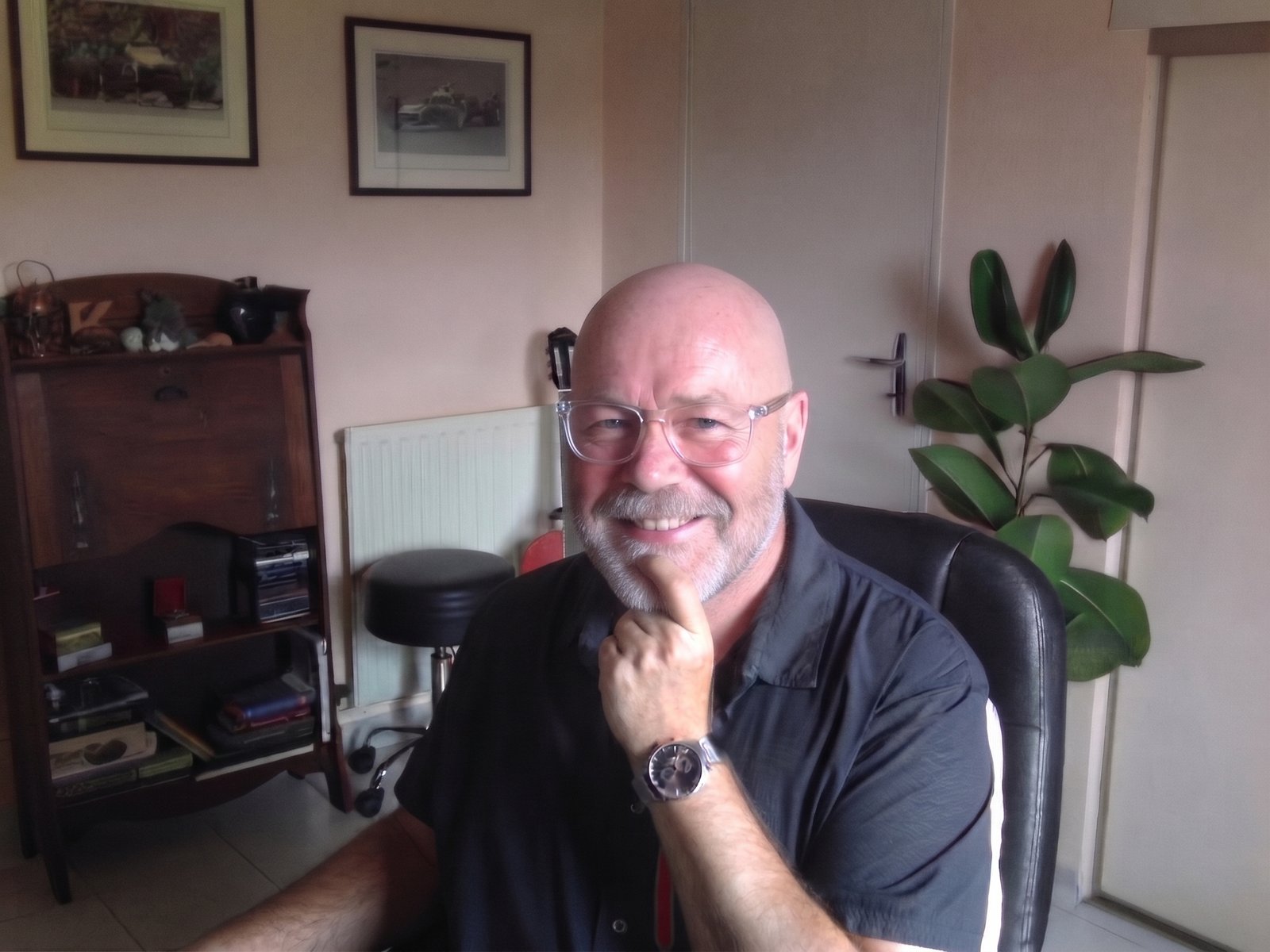
Nigel John Farmer smiling in his home studio

My grandfather was a preacher. I never heard him raise his voice, and yet the room would go quiet the moment he stood. It was not volume. It was something carried in the cadence, in the way a sentence was allowed to settle before the next one began. I did not have words for it then. I do now.

Later I found it in the cinema voices of my childhood, the ones that seemed to come from somewhere older than the screen. Walter Pidgeon, Michael Rennie, James Mason, Jack Hawkins. Men whose voices had weight without effort. I would sit in the dark and try to understand what they were doing, and eventually I understood that they were not doing much at all. They were being present, and trusting the room to meet them.

Training teaches you technique. It teaches you breath, placement, stamina, the mechanics of getting through a fourteen-hour manuscript without losing the thread. All of that matters. But none of it is the thing that makes someone lean in. The thing that makes someone lean in cannot be taught, because it is not a skill. It is a life, offered through the voice.

I have lived on four continents. I have been a journalist, a broadcaster, an author, a narrator. I have sat in rooms where silence was valued as much as speech, and in rooms where a voice had to carry across a continent of space. I did not collect places. I collected ways of hearing. And somewhere in all of that, the voice I use now arrived, not because I built it, but because I lived it.

Some voices are trained. Others are lived. The best ones, I think, are both.

Human-AI Collaboration

Why I Preserved My Voice.

August 2026

When I first heard a model speak in my voice, I went quiet for a long time. It was accurate. It had the cadence, the warmth, the slight weather of a life lived in damp places. It was, in every measurable way, me. And yet I knew, with absolute certainty, that it was not.

I chose to preserve my voice anyway. Not because the technology had arrived at something I could mistake for myself, but because it had arrived at something useful. There are projects a single pair of vocal cords cannot reach. There are languages I read well but do not speak with the ease of a native. There are catalogues of content that need a consistent voice across thousands of modules, and there is a human original who would rather be telling stories than reading terms and conditions.

So the model is an extension, not a replacement. It carries the voice where the voice cannot physically go. But the intention behind it, the choice of what to say and how to say it, the judgement about when a sentence has landed and when it has not, that stays here, with me, in the booth.

I think of it the way a musician thinks of an instrument. The piano is not the pianist. But a good pianist can make a piano say something a bad one cannot. The model is my instrument now, one of several. I play it the way I play the microphone, with the same care and the same restraint, and I keep the human at the centre of every note it produces.

Storytelling

Human Stories. Intelligent Tools.

July 2026

Everything I have done, across journalism and broadcasting and books and narration, comes down to one belief. People connect through stories. Not through information, not through features, not through the clever arrangement of words, but through the simple act of one life describing what it has noticed to another.

The tools around us are changing quickly, and they are genuinely remarkable. A voice model can carry a story across sixteen languages in an afternoon. A studio can be anywhere now. The distance between a thought and a listener has never been shorter. I welcome all of it, because I have watched tools arrive and disappear my whole life, and the ones that last are the ones that serve the story rather than replace it.

That is the whole idea behind VoiceWrap Studio. Human stories at the heart. Intelligent tools in their service. Never the other way around.

When the intention is human, the result feels human, however it was made. When the intention is missing, no amount of processing can hide the gap. So the work, for me, is not to resist the tools or to worship them. It is to keep putting something real in at the front, and to trust that what comes out the other end will still carry the warmth of a person who has actually been somewhere.

That is the only standard I know how to hold. Human stories. Intelligent tools. In that order.

Consciousness and Creativity

The Spark and the Container

September 2026

Read the full reflection

For many years I have explored consciousness, communication and the mechanics of reality. The deeper I look, the more I return to a simple observation: human beings are capable of extraordinary things, yet biology alone does not fully explain the experience of being alive.

We can map neural pathways, model behaviour and measure electrical activity, but none of those descriptions quite capture the spark that animates the container.

This is not an argument against science. Quite the opposite. Science has revealed a universe far stranger and more interconnected than previous generations imagined. Yet even within quantum mechanics, consciousness studies and neuroscience, important questions remain unanswered.

Living in the quiet of South West France has given me the space to reflect on those questions. I have come to believe that true sovereignty begins with recognising both our capabilities and our limitations. There is a freedom in accepting that not everything can be reduced to a formula.

The most interesting discoveries often emerge at the boundary between what we can measure and what we can only experience.

Perhaps the mystery is not a problem to be solved. Perhaps it is an invitation to participate in something larger than ourselves.

— Nigel John Farmer

Keep the conversation going

If a note here struck a chord

These articles are the starting point. Longer essays on voice, communication and the human side of technology are on the way. The door is open if you would like to be part of that conversation.

Write to Nigel